“I cannot tell you how much I long for music and color.”

146 Years of Max Reinhardt

September 9 marks the birthday of Max Reinhardt, without question the major force in German-speaking theatre at the turn of the twentieth century. Reinhardt’s theatre, a singular and plural entity to be sure, was very much that of the magician, a constantly shifting approach to both new and established works in a range of venues and styles. Despite his many triumphs, setback and tragedy befell his later years, especially as an exile of the Third Reich. His creative spirit, however, persisted until the end. I am always struck by a passage in a particularly morose letter of fall 1942, when Reinhardt, once the toast of European theatre, languished as an exile in New York with vanishing prospects, on the edge of bankruptcy, writing to his wife Helene Thimig, who was herself toiling away in Hollywood: “The season is already starting. We do not have a play.” The pain is so simply expressed: we do not have a play. A seemingly insignificant observation for some, but a massive shock for an artist whose schedule at his zenith would crush any modern director. He once summed up his situation to Thimig with one word: Ausradiert—“erased.”

Much has been done to reverse this erasure in both North American and European scholarship, and a major goal of my trip to Germany for dissertation research is to further that endeavor. Yet fitting his reputation as a master of the ephemeral art of the theatre, Reinhardt resources still exhibit plenty of gaps despite the bounties currently available. This is partly a consequence of Reinhardt’s flight from Europe and the ravages of the Second World War, but the man himself was notoriously reticent in expressing himself directly about his art, at least in the sustained way his contemporary Stanislavski did. What writings survive are highly evocative but evasive, not unlike the many Symbolist works he would make famous on his stages. If, as Reinhardt once observed, “the path to oneself is terribly long,” the path to Reinhardt is terribly oblique.

Picture1

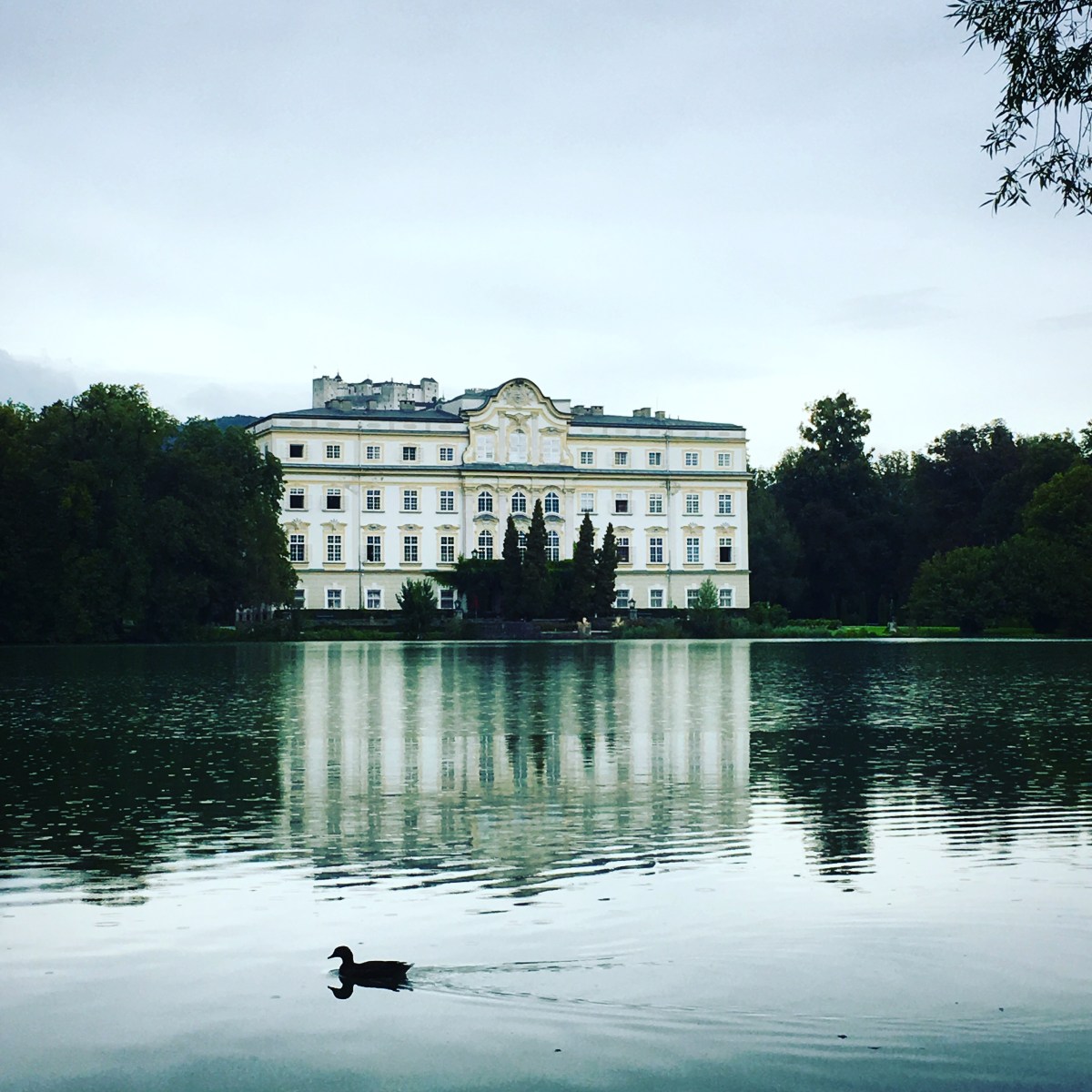
During my recent trip to Salzburg, a city which always had great significance to him as the site of his first professional engagement in 1893, I visited three significant Reinhardt locations. My first visit was to the Domplatz, where the Salzburg Festival was born on 22 August 1920 with his production of Hofmannsthal’s Jedermann. The second was the Kollegienkirche, where Das Salzburger Große Welttheater had its premiere in 1922. The third was Schloss Leopoldskron, originally a palace built for Leopold von Firmian, Prince-Archibishop of Salzburg, which Reinhardt later bought as his own residence and occasioned used for immersive performances.

Confiscated by the Nazis and later returned to his heirs, Leopoldskron is now a private hotel and the site of the Salzburg Global Seminar. While not available for tours, the palace can be viewed from across the Leopoldskroner Weiher. Amid a light rain shower on Sunday afternoon, I sat down at a bench opposite the rear garden and spent a decent amount of time in thought about where this research adventure is going and the challenges ahead on those metaphorical paths, not just to Reinhardt but to myself. If it is to be worthwhile, it must take time, and if it does not strain, it is likely not worth it. One of Reinhardt’s more revealing exercises in autobiography is the sketch of his train journey to Salzburg to take up that first engagement in 1893. The rhythm mimics the pulse of an engine, short and long sentences in alternation, full of expectancy and fear, but never losing that essential grasp of exhilaration. It’s a good example to follow.
A Letter from Salzburg

What’s the “Record” Seventy Years After Strauss?

This year, September 8 marks seven decades since the death of Richard Strauss. While I agree with Alex Ross and Bob Shingleton that anniversaries often lead to embarrassing surfeits of activity, this milestone carries a certain poignancy worth consideration. The copyright on Strauss’s compositions will lapse at the end of this calendar year, sending the scores into that neverland of public domain. For a composer who devoted consistent energy throughout his life in asserting his intellectual and financial rights as an artist, this is the ultimate (and literal) reversal of fortune and end of an era for one of the most lucrative musical estates of the twentieth century.

But whither “Kaufmann Strauss”? The episode is not without its resonances for the present. Despite the conventional divide between “art music” and “popular music,” the challenges that Strauss faced in the commercial side of the music industry continue across the divide. Even though the bulk of the composer’s efforts were devoted towards live performances of his works, it should never be forgotten that Strauss lived well into the era of modern media and was (to a point) an active participant. The battle for intellectual and monetary rights by musical authors and artists in an ever-expanding world of streaming services, (il)legal download platforms, and sections of the public growing incrementally averse to actually paying for music is just as relevant as it was a century ago.

It was just before this anniversary that the Internationale Richard Strauss-Gesellschaft (IRSG), in cooperation with the Richard-Strauss-Institut, the Herbert von Karajan-Institut, the Universität Mozarteum, and the Universität Salzburg, hosted the conference “Strauss on the Record: Karajan and the Legacy of Sound Materiality” in Salzburg. The joining of Strauss with another major music titan was apt. Arguably the most media-savvy of twentieth-century conductors, Herbert von Karajan’s legacy is indelibly bound up with that of Strauss as a performer and stage director, to say nothing of politics. The ten presentations between September 6 and 7 offered a stimulating range of perspectives on these topics, as can be seen from the full program book.

7D0059EC-FB08-463C-89B7-38B5BE37DFDF
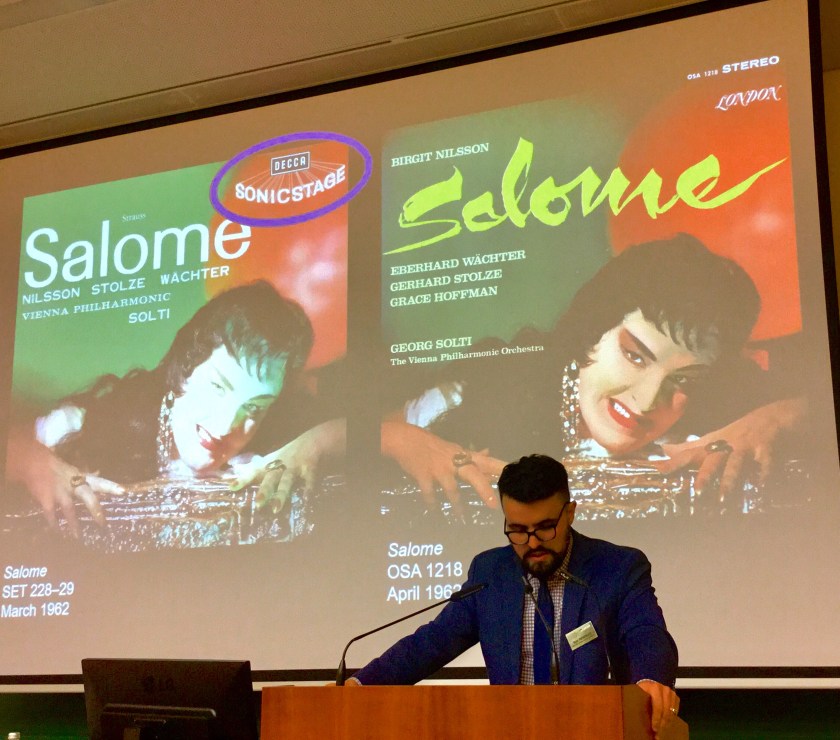
Discussing a masterpiece of visual camp, or a record cover from hell. Photo by Sally Drew.

My offering for the conference discussed the place of Strauss’s operas in the catalog of Decca Records via the lens of Christof Loy’s 2011 production of Die Frau ohne Schatten for the Salzburg Festival. Collectively, the gathering illustrated the richness of the current scholarship and the potential for evolving dialogues to develop between the archive, theory, criticism, and analysis. All this was capped by a magnificent Strauss Liederabend with soprano Lavinia Dames and pianist Carson Becke revisiting a special program performed by Strauss and Elisabeth Schumann in 1922, complete with improvised transitions in the Straussian tradition. As the IRSG continues to take root in its new home in Salzburg, and with a growing network of partnerships, the exchanges between scholars of various backgrounds about Strauss and his world will likewise prosper.

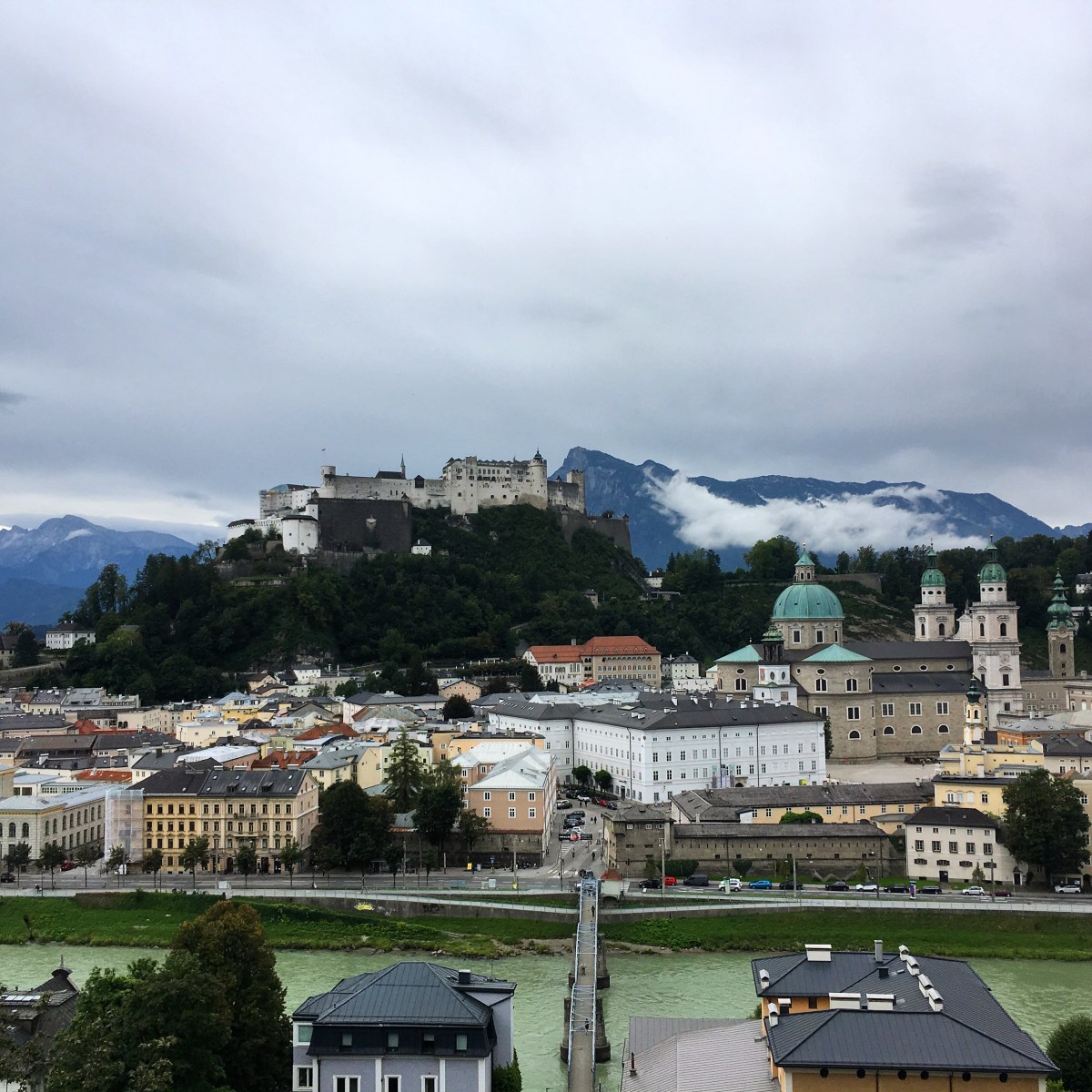
On top of the glorious stresses of delivering a paper, this trip marked my first visit to the city where Strauss and Karajan both cast long shadows as major cultural figures, the former as a founding father of the annual Salzburg Festival a century ago, and the latter as the prime mover of its aesthetic and commercial growth in the postwar era. The 2019 season had ended before my arrival, but as the founders knew full well, the city and its environs offer a theatre unto themselves, acted out everywhere from its twisting alleyways to the baroque promenades of its most stately edifices. Due homage was paid Sunday at the Kollegienkirche, site of the famous 1922 production of Hugo von Hofmannsthal’s Das Salzburger Große Welttheater, and Schloss Leopoldskron, once the home of the director and impresario behind the Festival, Max Reinhardt. The rainy and overcast sky lent the still surroundings of the Großes Festspielhaus and Felsenreitschule an expectant atmosphere. The 2020 Festival will offer yet another occasion for celebration and reflection as to the achievements of the founders and how their past efforts persist in our living present.