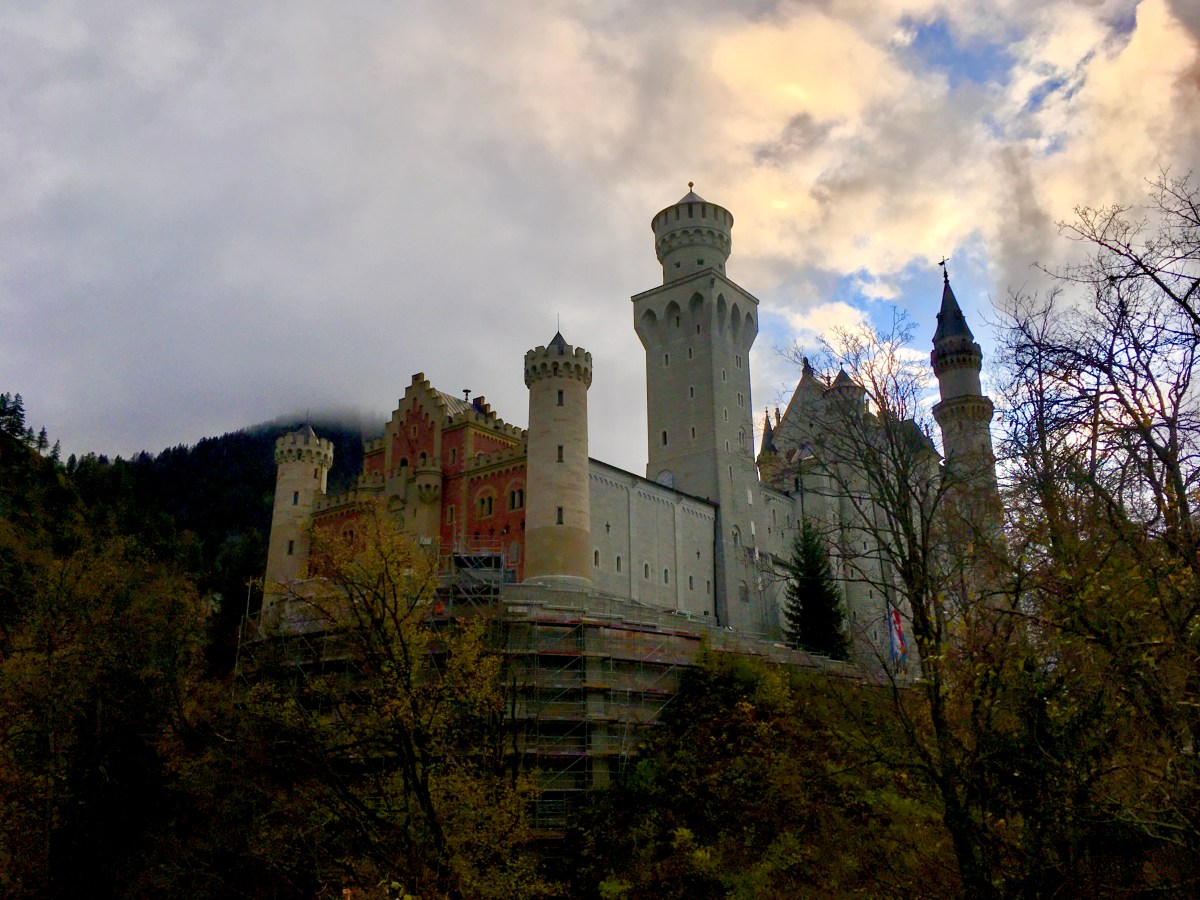
With friends visiting Munich this past week, I made my first trip to Bavaria’s most popular tourist locations outside of the ski runs: the royal palaces of Linderhof and Neuschwanstein built for King Ludwig II. (The opulent third palace of Herrenchiemsee, alas, remains on my to-do list.) In planning this excursion, we were blessed with a really remarkable tour service that bussed us to both locations with a short pitstop in Oberammergau. This allowed us to give our full attention to the sites themselves. It was a marvelous day, but as it wore on, I found myself dogged by a gnawing sense of melancholy. That that sensation should be engendered in these buildings makes sense. The dream children of the nineteenth century’s most royal introvert—the self-proclaimed “Night King” in contrast with his obsession with the Sun King—the palaces exude a sense of willful tolerance (if not passive resistance) to the fact that their portals, once designed for the occupation and isolation of one man, are now thrown open to thousands every day of the year. Not unjustly did I always feel like an intruder, but not, I hope, an irreverent one.
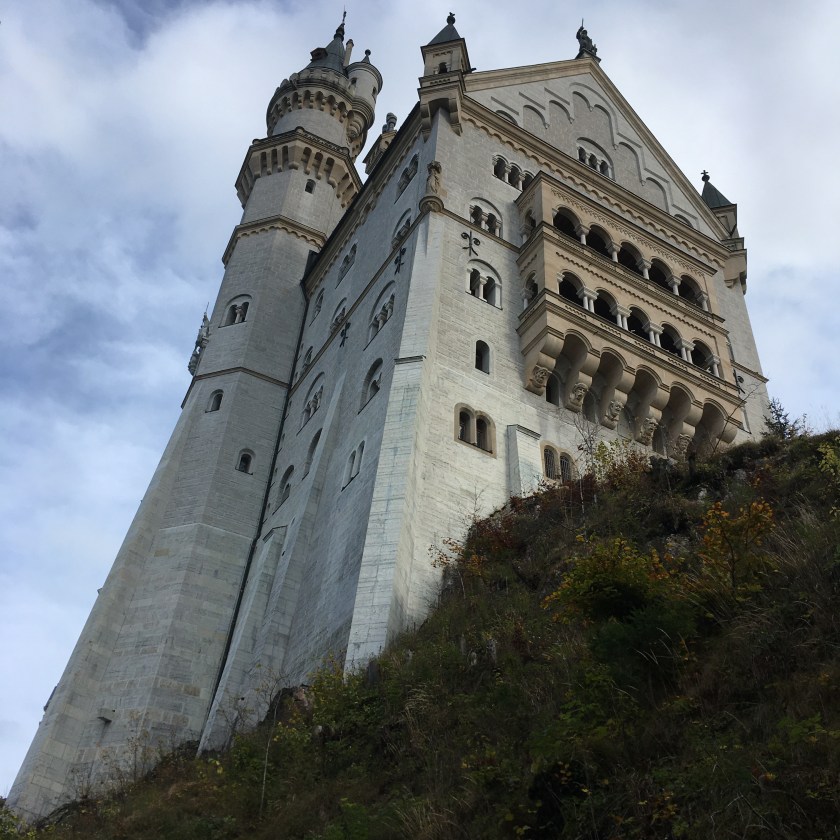
Before visiting, I had only known these magnificent structures from books. Wilfred Blunt’s The Dream King: Ludwig II of Bavaria remains the English language authority on the subject. It boasts a glorious array of photos and illustrations about the castles as well as Ludwig’s approach to visual and performing art, of which the structures are a clear extension. The real stars of these buildings are the innumerable craftworkers who executed every finial and stitch. But one should not short shrift Ludwig’s efforts. Hardly a detail of the exteriors and interiors did not undergo his scrutiny. His well-known obsession with Wagner’s works, always cited as the primary influence on Neuschwanstein, does little credit to the king’s voracious reading of epic and historical literature, to say nothing of art and architectural history. This is discussed in the texts, naturally, but its full scope can only be seen and appreciated in person. This is particularly true in the Neuschwanstein murals, which are far more philologically accurate than Wagner’s operas could ever hope to be.

A brief aside—I confess I was quite perturbed when the subject of Wagner and Ludwig as lovers came up during the tour, and that the Wagner family remains mum on the subject. It needs to be stated that while the gay king had plenty of infatuations (none of which were discussed in any detail on these tours), his preoccupation with Wagner was more akin to a religious devotion than a sexual interest. Ludwig’s ire when the extent of Wagner’s affair with Cosima von Bülow was exposed was less carnal jealousy than a biting sense of betrayal from the godhead. (I also suppressed the urge to mention that the Wagner family has plenty of other secrets to be mum and embarrassed about.)
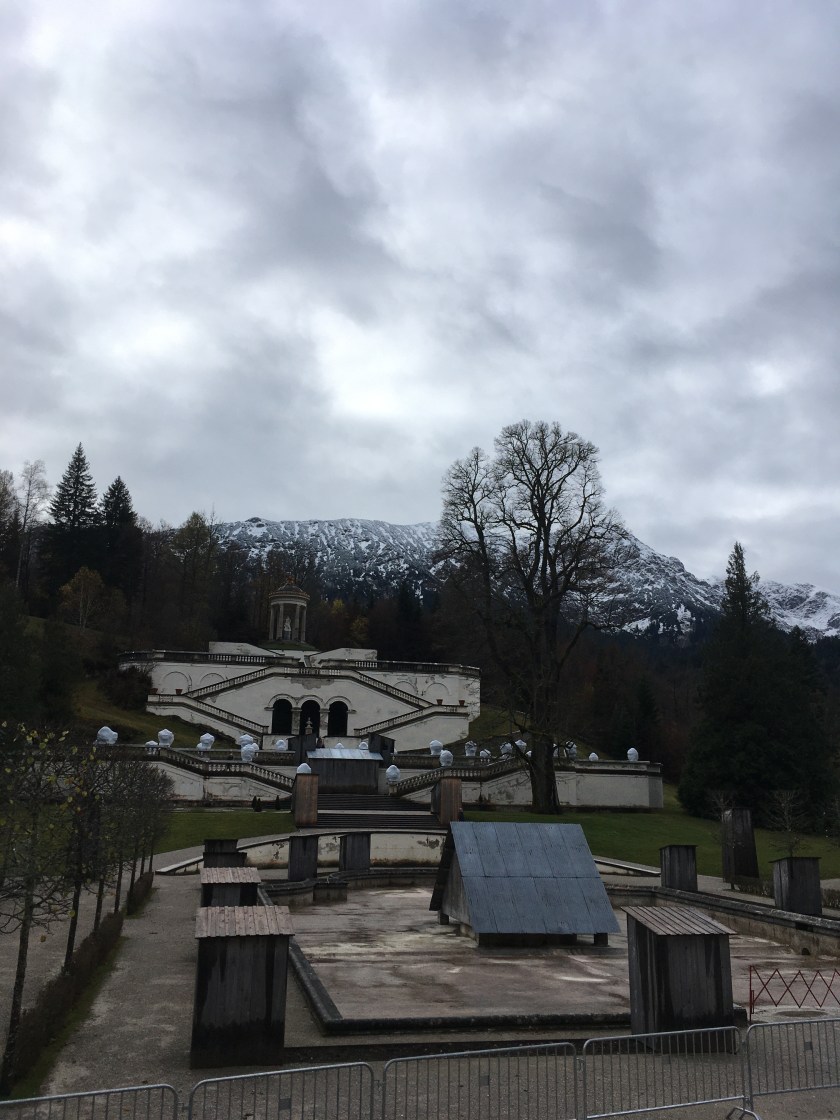
A visit to the Ludwig palaces in November means that the interiors are subjected to cleaning and maintenance, with the added shame that the gardens at Linderhof are shut up for the winter. These circumstances interestingly hint at the level of work which would have been required to maintain them during the king’s lifetime, especially Linderhof, the only palace that was completed and which was used extensively. While Ludwig famously commanded the loyalty of his people, it is his servants who must have had plenty of interesting stories of their own.
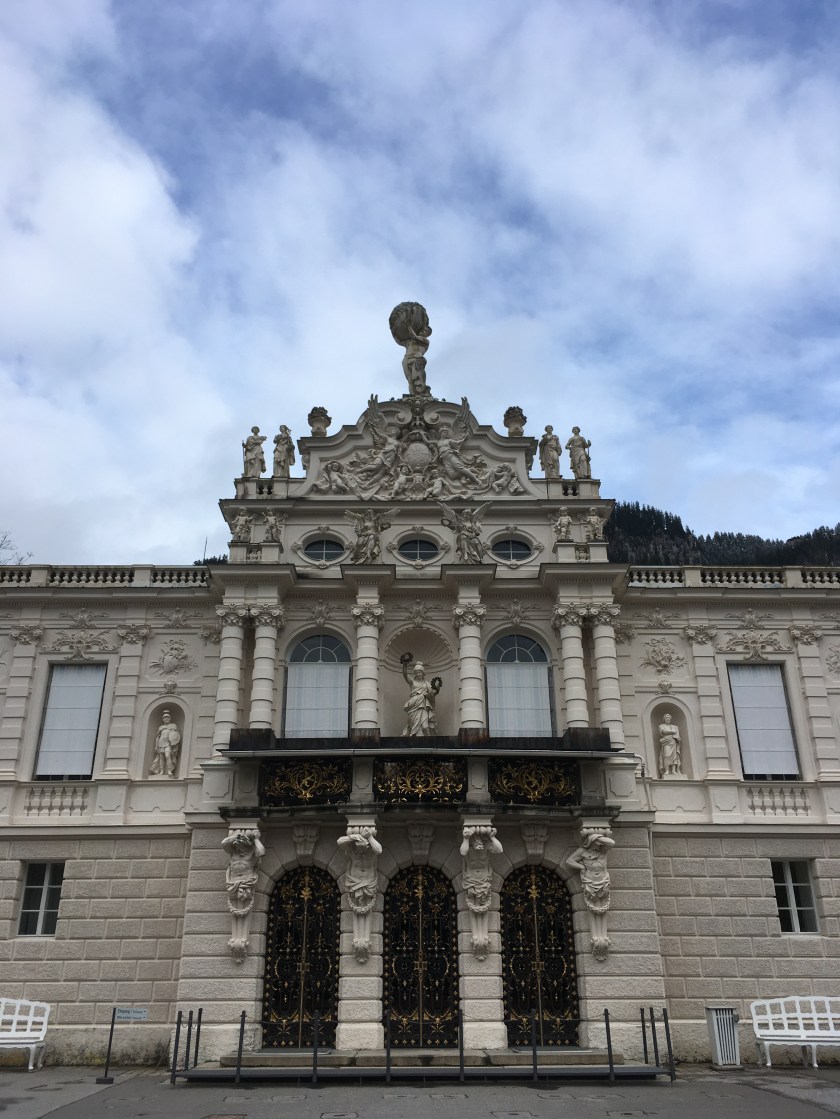
The blue-and-gold French fantasy of Linderhof still impresses, though its tapestries and cushions are rapidly fading and its gold leaf is in places held together only by tape. One is sadly unable to see many of the original floors, as utility carpets cover the entire path to protect them from—to use the phrase of Julia Sugarbaker—dirty feet overflowing rubber thongs. What is more, the most famous “visitor” damage to this rococo gem remains: the fractured panel in the small Hall of Mirrors, cracked during the filming of Visconti’s biopic. Yet as always with the maestro’s handiwork, there is a dividend. His realistic mise-en-scène captured these spaces on film before they passed over into our current realm of full-time attractions. Along with Tony Palmer’s epic film of Wagner’s life, Visconti’s Ludwig is an important visual artifact of the Ludwig palaces.
Thankfully, both sites forbid interior pictures. When one is crammed and rammed through in groups numbering some forty to sixty people, the hell of photography would be unimaginable. Moving from room to room, one already senses the disquiet of Ludwig’s spirit that his private realms have been opened up to the world. A thousand selfies would hardly improve that. As the chambers are also left predominantly dim, personal photography is all but useless. This and the unfortunate brevity of the assembly-line tours leave much of the fine detail unable to be unappreciated. As someone who studies the nineteenth century and German history in particular, I relish the chance to study every room at great length. The view of the castle from the Marienbrücke, however, will never fail to impress.
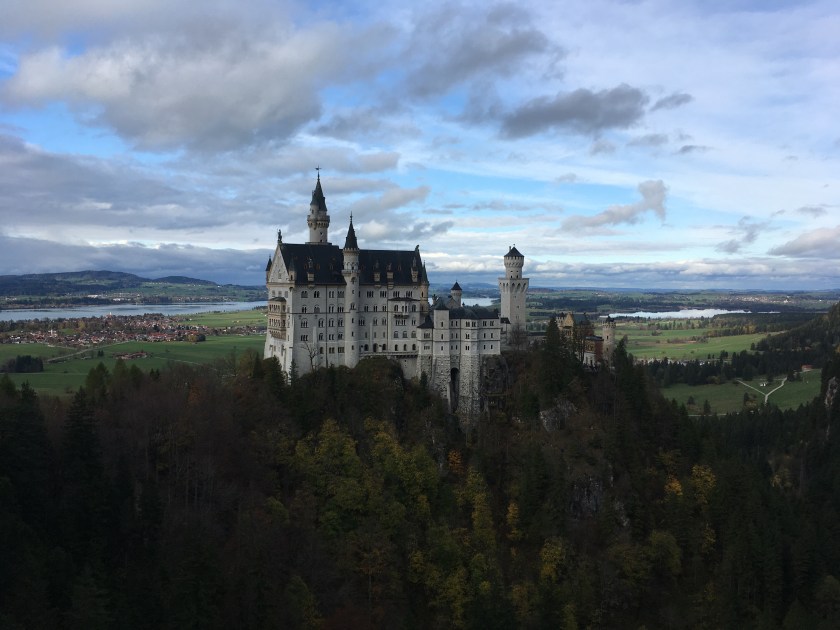
Luckily, Neuschwanstein has a small but fascinating exhibit of the sketches and plans left by Ludwig’s army of designers. The castle, like its master, remains a bizarre apogee of Romanticism. It is perhaps the finest opera set ever built, even it is left incomplete. While waiting for our tour in the courtyard, I momentarily pondered why, with all the money supposed generated by the Ludwig palaces, has there never been an attempt to realize the unfinished aspects of the castles, such as the keep and chapel at Neuschwanstein. Such an endeavor would without a doubt be immediately construed as wasteful, and there is something to be said for leaving the palaces in that state between dreams and reality, just as their owner left them over a century before.
The roads by which human residences become museums, memorials, monuments, or some combination of all three, are curious ones. Like the Frank Lloyd Wright houses in America, the Ludwig palaces are always showing the wear-and-tear of this tourist rigor, an aspect of historical sustainability that imperils the survival of these structures in the decades and (presumably) centuries to come. One wonders just how long they can (or should) be maintained. Does one abstain from the opportunity to visit imperiled sites as a conscious act of preservation? How do we navigate the ethics of “the visit” when evidence shows over and over that tourism, for all its profits, carries a cumulatively destructive price? One should always pause before the ticket queue and think about what entering a structure entails. Dreams, after all, are delicate things.
 Can You Not Hear It?