
Farrago for March 11–14

The first of many for the 7-day to come.

farrago, n. — A confused group; a medley, mixture, hotchpotch.

It is the intention to post a “farrago” of notable anniversaries and birthdays for the full calendar week (Monday through Sunday), but as it is midweek, this installment will start out a little abbreviated.

These farrago will by no means be exhaustive, but they will—hopefully—not lack fascination.


MARCH 11

1867 – Verdi’s Don Carlos premieres in Paris in its initial French-language iteration. While Otello and Falstaff unequivocally remain supreme constructions, this grand opera is my favorite of all Verdi’s stage works, in either/any of its versions.

No photo description available.


In many hands, the opera is a period piece de jeur but in the hands of the always provocative but always incisive Peter Konwitschny, that enemy to the friends of dead opera, Don Carlos takes on a visceral political context. Here is the climax of act three, the auto-da-fé before Valladolid Cathedral.

1950: The second version of Sergei Prokofiev’s Symphony no. 4, op. 112, debuts on a radio broadcast with the BBC Symphony Orchestra under Sir Adrian Boult. (The first concert performance under Gennady Rozhdestvensky does not take place until 1957.) Fresh off the success of his Fifth Symphony, Prokofiev sought to rehabilitate the first version of his Fourth Symphony, originally premiered in Boston in November 1930. Not long after completing the in 1947, however, Prokofiev was denounced and accused of formalism in the “Zhdanov Decree” of 1948. The expanded Fourth develops further the material Prokofiev adapted from his ballet The Prodigal Son, resulting in an epic canvas unique among the composer’s symphonies.

1957: The Lady Chablis is born in Quincy, Florida, but she forever belongs to Savannah: “I’m not a fictional character, honey. I am for real.”


MARCH 12

Happy Birthday to the divine and essential Lesley Manville! Here in conversation with director Mike Leigh.


MARCH 13

1781: Architect, artist, and designer extraordinaire Karl Friedrich Schinkel is born in Neuruppin in Brandenburg. His design for the 1816 production of Die Zauberflöte at the Hofoper Unter den Linden may well be the most iconic opera set ever designed.

No photo description available.


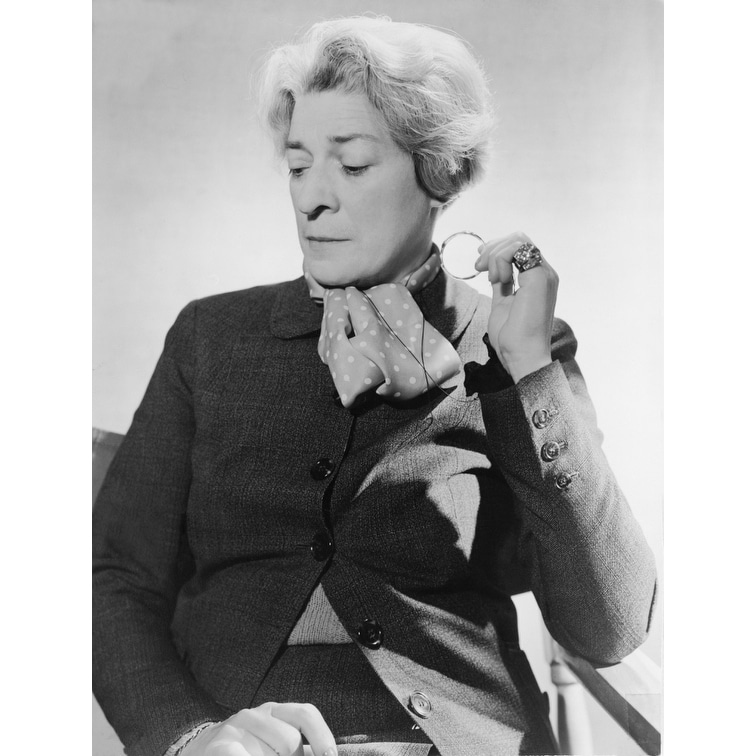
1892: Journalist Janet Flanner (the “Genêt” of New Yorker fame) is born in Indianapolis: “I keep going over a sentence. I nag it, gnaw it, pat and flatter it.”
Janet Flanner History - Overstock - 24419777

1954: The animated short Bugs and Thugs is released. Another installment of Bugs’s misadventures with the diminutive Rocky and the moronic Mugsy, the short recycles many of the precepts director Friz Freleng introduced in his earlier 1946 Racketeer Rabbit. Foremost among them is the “fake cop” routine, wherein Bugs imitates a whole police squadron, who promptly show up thereafter.


March 14

1853: Swiss painter Ferdinand Hodler is born in Bern. How I ended up in the upper right hand corner of his painting Die Nacht (1890) I’ll never know.

1887: Sylvia Beach is born in Baltimore. One of the great American expats living in Paris between the World Wars, Beach founded the bookstore Shakespeare and Company and famously published Joyce’s Ulysses in full in 1922.

1934: Jazz organ legend Shirley Scott is born in Philadelphia.

1965: György Ligeti’s Requiem debuts in Stockholm with the Swedish Radio Symphony Orchestra and Chorus conducted by Michael Gielen. Perhaps the most recognized of his compositions, the Requiem shows off the composer’s command of a highly intricate polyphony. The work took on a new life after Kubrick’s use of the “Kyrie” section in 2001: A Space Odyssey.

Until next week.

Dissertations: I. The Path to the Project

Back from the Land of Dissertations with thoughts on it all.

On Friday, February 26, I successfully defended my dissertation “The Theatrical Collaborators of Richard Strauss: Networks, Materials, and Cultural Politics.” As I am long overdue to resume blogging, this post is the first in a series about my research, as well as the process of completing a dissertation during the era of COVID-19. As always on this blog, I embrace the format of the fragment, which is also the prevailing mentality after so much work. I state at the outset that I only write to and from my own experiences.

***

Having reached my destination, it is only natural to reflect and wonder how it all (miraculously) came about and came together. For me, this is mostly an act of endless cringing, as I am always inclined to see most successes as “almost-were-failures” saved by pluck and luck. Perhaps, once upon a time, I read too much into an anecdote that stuck. The Roman generals awarded triumphs were accompanied in their processional chariots by slaves who warded off the “evil eye” by whispering into their masters’ ears: “Look behind you, and remember that you are a mortal.” Success is never a sure thing, and (chalk it up to a Catholic upbringing) relishing in it is dangerous. I would do well, however, to remember the Stoic Epictetus’s related observation: “Whenever you grow attached to something, do not act as though it were one of those things that cannot be taken away, but as though it were something like a jar or a crystal goblet, so that when it breaks you will remember what it was like, and not be troubled.”[1]

***

I vividly remember in my final year of undergrad informing a professor who asked that I had no interest whatsoever in getting a Ph.D. Now it seems to be the most obvious course, but back then, I would have none of it. The path of the ensuing decade led to work as a professional stage manager, opera house intern, professional theater apprentice, a marketing and events assistant, more odd jobs than I care to count or remember, plus one year of a stage management M.F.A. program, then jump into a musicology master’s, one year of a musicology Ph.D., five cross country moves, one international move, and a pandemic. Fortunately, I can say that all of it was valuable. Finally, none of it would have been possible without my husband Robert’s love and support, the constant through it all.

***

Blame opera. The nerdish hobby became the scholastic occupation. It was not, however, clear that it would be Strauss. I went into my master’s wanting to go after Wagner, but 2013/2014 was Wagner hot for the anniversary year. Strauss, however, stood me well in two first semester musicology seminars, and there was plenty to keep me going. Robert Graves once commented on the success of his I, Clavdivs books that since he was good to Claudius, Claudius was good to him. I would like to feel that Strauss and I operate the same way.

***

Ten Observations for Dissertators:  

  1. You, your research, and your writing are all worth it, and never concede that to anyone. My academic path was blessed (the only time I will ever use this adjective without irony) with so many encouraging figures. It also had its share of antagonistic malefactors, who are better left nameless and forgotten. Sadly, hazing in all branches of the academy can at times border on psychological warfare. While some can claim this is done in the service of higher goals and betterment, I politely deem that line of thinking to be patent tripe. You cultivate gardens. You do not steamroll them. The roster of adversaries also includes people outside the academy who think that writing carries none of the worth or strain of conventional labor. I encourage you to ask them to write over 200 pages sometime.
  2. Belief in worth does not preclude self-criticism and your own sense of (hopefully rigorous) standards. You owe it to yourself and your subject to make your thinking and writing as robust as possible. Nothing is less enjoyable to read than something written in a mediocre or slapdash manner unless that be your intention. Grasp what is effective and keep asking yourself to be better. Commit to improvement in all its facets as much as it is possible.
  3. You are nothing without the help of the staffs of your department and university library. These people are the ones who get so many thankless tasks done. Value and praise them.
  4. Write the kind of scholarly writing that pleases you. Myself, I like accessible writing that tells a good story with lots of concrete and cited evidence without getting bogged down in jargon or dubious theoretical constructs. The voice I always have in my head is that of Frederic Spotts in his history of the Bayreuth Festival, which I highly recommend everyone read. It is valuable to general readers and experts alike.
  5. Find writing methods and habits that give you the time and headspace to work effectively. This is often the most formidable task for graduate students whose time, even before they move into the full dissertation phase, is substantially occupied by their own course work, whatever job(s)/appointment(s)/funding they have to see them through, to say nothing of their own private lives. (I used the term “work” above since dissertating involves not only writing but reading, searching, thinking, among other tasks.) Early on, I found it helpful to identify how long a reasonable period of work can last and where it fell in the day or week. I am generally best with three-hour blocks early in the morning, but on days when I am on my own, I could squeeze in up to three of these blocks in a day. Coupled with this is the need to identify when you reach the point of diminishing returns. Your mind, as well as your body, will let you know when to call it a day. For me, this happens in the evenings when I feel my nose go cold after hours staring at a computer screen.
  6. But still, write something every day. I admire the goal Shirley Jackson set for herself to write one thousand words a day and am thankful on the odd days when that actually happens. I am also grateful for days when I can only get down a few sentences. At least they are a few sentences more than the day before and a day without sentences. Like stretches, writing only gains efficacy when it is done regularly.
  7. Write what is in your mind to get it out of your mind. One of the biggest lessons I learned was the value of being flexible about what I was putting to paper. Just because I was writing on one topic in a chapter did not mean I had to stick at it to the exclusion of everything else.
  8. Plans are there to be changed. This applies from everything to internal chapter outlines to the entire scope of the dissertation. While matching the result with the initial idea would be a pleasure in itself, genuine discoveries—the greatest of academic pleasures to my thinking—are genuine blessings.
  9. Assemble reliable playlists, especially for challenging moments. My go-to’s for when I need to stay focused are Russian symphonies, Shostakovich’s Eighth and Twelfth, and Prokofiev’s Fourth (the revised version) at the top of the list. Though I authored a dissertation about Strauss, I (un)surprisingly listened to Strauss’s music sparingly while writing, at least not the operas. Since I tend to get caught up in the dramatic action, I avoid working with texted music in the background (For Strauss, this meant relying on the tone poems, generally Kempe’s recordings with the Dresden Staatskapelle). There were, however, some significant exceptions to this rule. About mid-autumn of 2020, with inspiration flagging, I found bizarre solace in Apple Music’s 90s Soft Rock playlist, mostly because these were songs I heard on the radio growing up, and they helped put me in a more childlike (read: open and playful) state of mind. And because sometimes you just need undemanding music for its beat, RuPaul’s albums were in regular circulation.
  10. Stop what you are doing and stretch, take a walk, and while you are at it, get a massage and have a nap. Nothing is more lethal to your anatomy and posture than writing at a machine. Even with the most ergonomically ideal accoutrements, your musculature needs help. You also do no favors

***

Finally, I can only urge those who have begun to finish. Circumstances, naturally, will arise to make completion improbable, impractical, or impossible. Only you know your limits. Where you can, overcome them. Onward, true believer.


[1] Epictetus, Discourses, Books 3–4; Fragments; The Encheiridion, trans. W. A. Oldfather, Loeb Classical Library 218 (Cambridge: Harvard University Press, 1928), 213.